Emergency Preparedness: PCOL Wilson Doromal’s Book Offers a Practical Guide to Family Safety


October 13, 2026
Emergency Preparedness: PCOL Wilson Doromal’s Book Offers a Practical Guide to Family Safety
Central Global University highlights the importance of proactive safety, practical emergency planning, and family preparedness through a foreword by its President, Mr. Khakhaber Kukhianidze.
Emergencies can happen without warning, leaving individuals and families with little time to think clearly or decide what to do next. Whether facing a fire, a medical emergency, a natural disaster, a security threat, or a digital safety concern, being prepared can make a significant difference in how people respond.
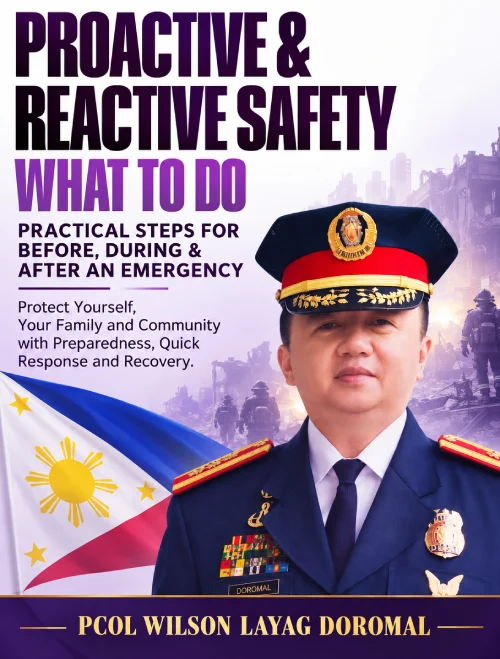
Addressing these critical concerns, Proactive and Reactive Safety: What to Do Before, During, and After an Emergency by PCOL Wilson Doromal presents a practical approach to personal security and family protection. The book emphasizes that emergency preparedness is not simply a response to danger; it is a proactive habit built through awareness, planning, and consistent action.
In the book’s foreword, Mr. Khakhaber Kukhianidze, President of Central Global University, recognizes the value of combining practical safety strategies with personal responsibility and faith. His message encourages readers to develop the knowledge and confidence necessary to protect themselves and their loved ones when unexpected situations arise.
Understanding the Importance of Emergency Preparedness

Many people begin thinking about safety only after an emergency has occurred. However, effective preparedness starts well before a crisis develops. Knowing whom to contact, where to go, what supplies to keep available, and how to respond under pressure can help families make more informed decisions.
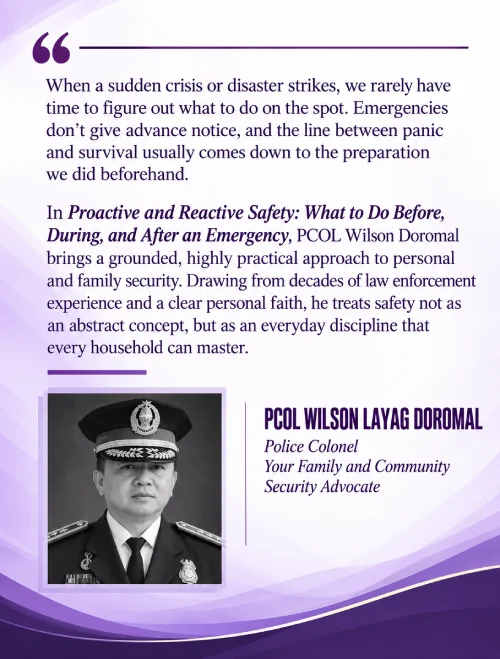
Through a grounded and accessible approach, PCOL Wilson Doromal presents safety as an everyday discipline rather than a subject reserved for professionals or emergency responders.
The book encourages readers to consider the risks they may encounter at home, in their communities, and in their digital lives. By identifying potential hazards and establishing clear procedures in advance, families can improve their readiness and reduce avoidable confusion during stressful situations.
A Practical Approach to Personal and Family Safety
One of the book’s key strengths is its focus on actionable guidance. Rather than treating safety as an abstract concept, it connects preparedness with practical steps that individuals and households can incorporate into their routines.
The book addresses several important areas of safety, including:
- Preventing emergencies: Recognizing potential hazards and taking reasonable steps to reduce risks before incidents occur.
- Preparing for unexpected events: Establishing emergency plans, organizing essential information, and identifying the resources needed during a crisis.
- Responding effectively: Understanding basic actions that may be necessary during situations involving fires, choking, and other urgent hazards.
- Recovering after an emergency: Recognizing that safety planning also involves reviewing what happened, restoring essential arrangements, and strengthening future preparedness.
- Protecting digital information: Paying attention to account security and sensitive personal information as part of a broader approach to modern safety.
Together, these areas highlight the importance of treating personal security as a continuous process that extends beyond immediate physical threats.
The 3 Ps of Emergency Preparedness
The book introduces the essential 3 Ps of emergency preparedness as a framework for helping readers approach safety in a more organized way.
The central idea is to move beyond uncertainty by developing habits that support readiness and informed action. Families can apply this principle by discussing possible emergencies, understanding their responsibilities, and agreeing on the steps they should take if a crisis occurs.
Preparation becomes more effective when everyone in a household understands the plan. Children should know how to contact a trusted adult, family members should be aware of meeting points, and essential emergency contacts should be accessible when needed.
By encouraging readers to make preparedness part of everyday life, the book reinforces the idea that small, consistent actions can contribute to a safer household.
The 7-Point Plan: A Simple Framework for Action
Another practical feature highlighted in the foreword is the book’s 7-Point Plan, organized around the letters A–B–C–D–E–F–G.
A structured plan can help readers organize important safety considerations and approach emergency planning systematically. Instead of relying entirely on memory during a stressful situation, individuals can establish procedures and reference information in advance.
For families, a practical approach to implementing an emergency plan can include identifying emergency contacts, understanding evacuation routes, agreeing on communication methods, organizing essential supplies, and reviewing the plan regularly.
The value of a structured framework lies in its ability to make safety planning more approachable. When instructions and responsibilities are clear, family members have a better starting point for making decisions during an unexpected event.
From First Aid to Digital Security: A Broader View of Safety
Modern safety involves more than physical protection. Although household hazards and medical emergencies remain important concerns, digital security has also become an essential part of protecting individuals and families.
The book’s coverage of first-aid situations, fire-related hazards, and digital account security reflects this broader understanding of personal safety.
Readers are encouraged to recognize that different emergencies require different responses. For example, a medical emergency may require immediate assistance from trained responders, while a compromised digital account may require securing access credentials and contacting the relevant service provider.
Learning basic safety principles can help individuals recognize when to act independently, when to seek professional assistance, and when to contact emergency services.
Practical knowledge should always be applied within the limits of one’s training, particularly in situations involving medical emergencies, fires, or other immediate threats.
The “My Secret Chamber”: Keeping Essential Family Information Organized
A particularly distinctive feature highlighted in the foreword is the book’s “My Secret Chamber” section, which is designed to serve as a continuing family reference.
The section provides a designated place for recording important information, including vital contacts, financial details, account information, and emergency plans.
Keeping essential information organized can help reduce the difficulty of locating important details when they are urgently needed. Families may also benefit from maintaining an updated list of emergency contacts, medical information relevant to responders, insurance details, and copies of important documents.
However, information such as passwords, banking credentials, and other sensitive data must be handled carefully. Such details should be stored securely, protected from unauthorized access, and never left in an openly accessible document. A reputable password manager and secure storage practices can provide safer ways to manage confidential information.
The broader principle is that preparedness involves knowing where essential information is kept and ensuring that authorized family members can access it when necessary.
The Role of Faith, Responsibility, and Prudence
The foreword also connects emergency preparedness with the values of faith, responsibility, and prudence.
Referring to Proverbs 22:3, Mr. Kukhianidze draws attention to the importance of recognizing danger and taking appropriate precautions. The passage offers a meaningful perspective on why preparation matters: responsible action often begins with awareness of potential risks.
This connection between faith and practical strategy gives the book a perspective that extends beyond checklists and procedures. It encourages readers to approach safety with thoughtfulness, discipline, and a sense of responsibility toward their families and communities.
The message is relevant to households, community leaders, congregations, and individuals who want to develop a more considered approach to personal security.
Why Every Family Should Have an Emergency Plan
An effective family emergency plan does not need to be complicated. It should be clear, accessible, and suited to the household’s needs.
Families can begin strengthening their emergency preparedness by taking a few practical steps:
- Identify likely risks: Consider hazards relevant to the home and local environment.
- Create an emergency contact list: Include local emergency services and trusted contacts.
- Establish meeting points: Decide where family members should gather if they become separated.
- Prepare essential supplies: Keep appropriate first-aid materials, drinking water, necessary supplies, and emergency equipment available.
- Discuss evacuation procedures: Make sure household members understand safe exits and alternative routes.
- Protect important information: Organize documents and secure sensitive digital and financial details.
- Review the plan regularly: Update contact details, check supplies, and practice relevant procedures.
These measures provide a starting point for developing a household safety routine. Plans should be adapted to individual circumstances and local emergency guidance.
About Proactive and Reactive Safety: What to Do Before, During, and After an Emergency
Written by PCOL Wilson Doromal, the book focuses on practical approaches to personal and family safety, bringing together preparedness, emergency response, recovery, and digital security.
Its emphasis on actionable frameworks aims to help readers move from simply understanding the importance of safety to developing habits they can apply in daily life.
Through the foreword, Mr. Khakhaber Kukhianidze, President of Central Global University, underscores the importance of preparation and responsible action. The message is straightforward: people may not be able to predict every emergency, but they can take meaningful steps to improve their readiness.
Conclusion: Building a Culture of Preparedness
Emergency preparedness begins with the recognition that unexpected events can affect anyone. While no plan can eliminate every risk, advance preparation can help individuals and families respond with greater clarity and confidence.
Proactive and Reactive Safety: What to Do Before, During, and After an Emergency offers readers a practical perspective on developing safer habits, organizing essential information, and approaching emergencies with greater awareness.
The foreword by Mr. Khakhaber Kukhianidze reinforces the importance of combining preparation with personal responsibility and prudence. Its message serves as a reminder that protecting loved ones begins long before an emergency occurs.
By making safety planning part of everyday life, families can take meaningful steps toward building a more prepared, informed, and resilient future.
About Central Global University
Central Global University is committed to supporting learning and the exchange of knowledge across diverse fields. To learn more about the university and its initiatives.
Contact Information
Mr. Khakhaber Kukhianidze
President, Central Global University
Contact: +995 595 038 018
Share This :

Contact Info
Social Media
Subscribe to Our Newsletter
Important Links
Explore More
Discover Policies
Other Links
Copyright © 2026 Central Global University. All rights reserved.